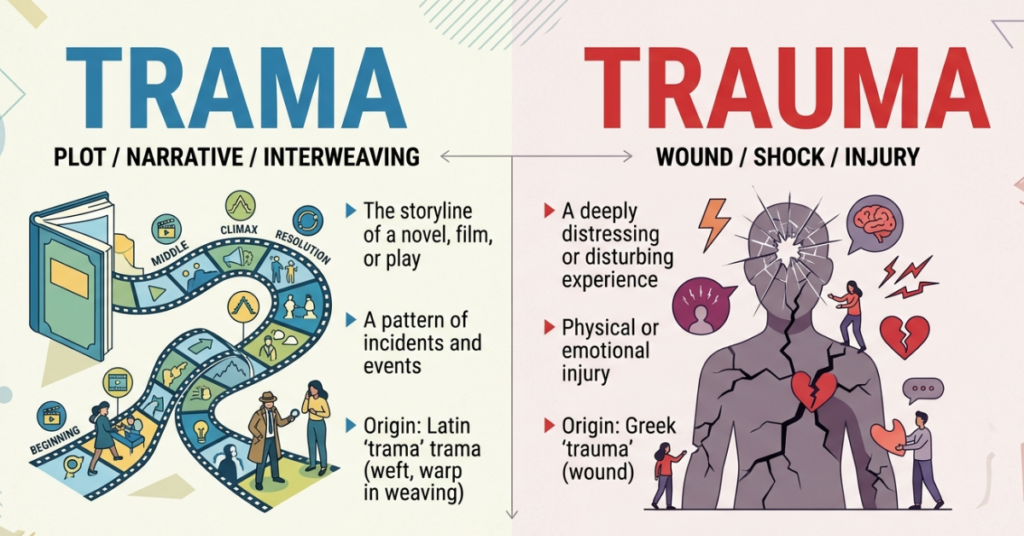
Have you ever seen the terms trama vs trauma and wondered why they look so similar but seem to mean completely different things? This confusion is very common, especially for students, writers, and language learners.
In this guide, we’ll break down the difference in a simple and clear way. You’ll learn what each word means, where they are used, and how to remember them easily without mixing them up again.
Understanding Trama vs Trauma
At first glance, both words look almost identical. But their meanings come from completely different fields.
One is related to storytelling and structure, while the other is linked to emotional and physical experiences.
Let’s understand them separately.
What Does Trama Mean?
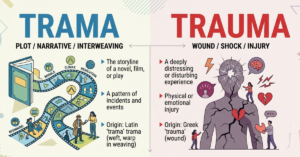
The word trama is mostly used in languages like Spanish and Italian. It usually refers to:
- The plot or storyline of a book or movie
- The structure of events in a narrative
- The way a story is organized
In simple terms, it is all about how a story is built and connected.
What Does Trauma Mean?
Trauma is a medical and psychological term. It refers to:
- Emotional distress caused by a shocking event
- Physical injury due to accidents or violence
- Long-lasting mental impact of painful experiences
It is often studied in psychology and healthcare because of its effect on mental well-being.
Key Differences Explained
To clearly understand the difference, compare them side by side:
1. Field of Use
- Trama: Literature and storytelling
- Trauma: Psychology and medicine
2. Meaning
- Trama: Structure of a story or plot
- Trauma: Emotional or physical harm
3. Impact
- Trama: No emotional damage involved
- Trauma: Can deeply affect mental health
Why People Mix Them Up
It’s easy to confuse these two terms because:
- They look almost the same in spelling
- They sound similar when spoken
- Typing mistakes happen frequently
- Many people are unfamiliar with the foreign language origin of trama
But once you understand the context, the confusion disappears quickly.
Easy Trick to Remember
Here’s a simple memory hack:
- Think of “trama” = tale or storyline
- Think of “trauma” = trouble or pain
This small association makes it much easier to recall the difference.
Real-Life Examples
Example of Trama
- The storyline of the film had a complex and emotional structure.
Example of Trauma
- After the accident, he experienced emotional distress and needed support.
FAQs
1. Are trama and trauma the same?
No, they are completely different words with different meanings and uses.
2. Is trama an English word?
No, it is mainly used in Spanish and Italian for describing a story plot.
3. Can trauma affect mental health?
Yes, it can lead to conditions like anxiety, depression, and PTSD.
4. Why do people confuse these words?
Because of similar spelling and pronunciation.
5. Where is trauma commonly used?
It is used in psychology, medicine, and mental health discussions.
Conclusion
Understanding the difference between trama vs trauma is actually very simple once you break it down. One belongs to storytelling, while the other belongs to emotional and physical health.
If you remember “story vs suffering,” you’ll never confuse them again. Keep practicing with examples, and the difference will become second nature.