It only takes one missing letter to completely change a word—or turn it into something incorrect. That’s exactly what happens with trama vs trauma. At first glance, they look similar, but only one is correct in standard English.
In this guide, we’ll break down the meaning, spelling, and usage so you can confidently understand the difference and avoid common mistakes.
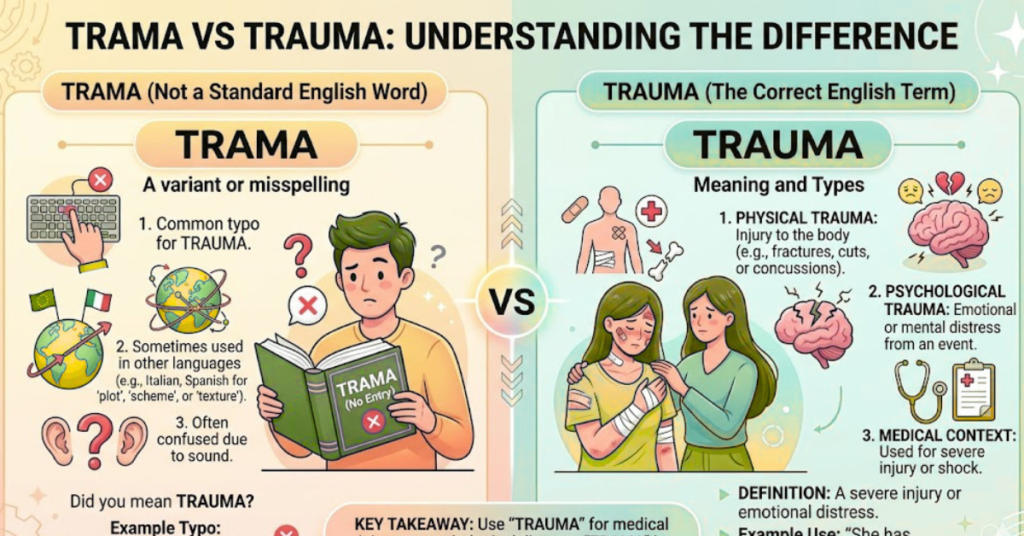
Trama vs Trauma: Which Is Correct?
Let’s get straight to the point:
- Trauma is the correct spelling
- Trama is a misspelling (in English)
So when comparing trama vs trauma, “trauma” is the only proper word you should use in writing.
What Does “Trauma” Mean?
“Trauma” is a widely used term in both medical and everyday language.
Definition
- A physical injury or wound
- A deeply distressing or disturbing emotional experience
Types of Trauma and Their Meanings
Understanding the different uses of “trauma” helps clarify its importance.
Physical Trauma
This refers to bodily injury.
- Cuts, fractures, or accidents
- Medical emergencies
Example:
- The patient suffered severe trauma after the accident
Emotional or Psychological Trauma
This involves mental or emotional distress.
- Stress from difficult experiences
- Long-lasting emotional impact
Example:
- Childhood trauma can affect behavior later in life
Why “Trama” Is Incorrect
“Trama” often appears due to simple spelling errors.
Common Reasons for the Mistake
- Missing the “u” while typing quickly
- Pronunciation differences in accents
- Lack of familiarity with the correct spelling
In English, “trama” has no recognized meaning, which makes it incorrect in most contexts.
Trama vs Trauma Meaning Explained
Here’s a simple breakdown:
- Trauma = a real word meaning injury or emotional distress
- Trama = incorrect spelling in English
Understanding this makes it easy to avoid confusion.
How to Remember the Correct Spelling
Spelling mistakes happen, but they’re easy to fix with a few tricks.
Helpful Tips
- Remember that trauma includes the letters “au”
- Think of related words like “traumatic”
- Double-check spelling in important writing
- Say the word slowly: “trau-ma”
These small habits can help you write more accurately.
Common Mistakes to Avoid
Even a simple word like this can be misused.
Watch Out For
- Writing “trama” in formal writing
- Assuming both spellings are acceptable
- Skipping spell-check tools
Correct spelling is especially important in professional and academic contexts.
When to Use “Trauma” in Writing
Use “trauma” whenever you’re referring to injury or emotional distress.
Common Situations
- Medical discussions
- Mental health topics
- Personal experiences
Example:
- He is recovering from emotional trauma
FAQs
What is the difference between trama vs trauma?
“Trauma” is the correct word, while “trama” is a misspelling in English.
Is “trama” ever correct?
In English, no. It may appear in other languages, but not in standard English usage.
What does trauma mean?
It refers to physical injury or emotional distress caused by a difficult experience.
Why do people write “trama”?
Usually due to typing errors or unfamiliarity with the correct spelling.
How can I remember the correct spelling?
Think of the word “traumatic,” which includes the same “au” pattern.
Conclusion
When it comes to trama vs trauma, the answer is clear: “trauma” is the correct and accepted spelling. The confusion often comes from simple typing mistakes, but once you recognize the pattern, it’s easy to remember.
Whether you’re writing about physical injuries or emotional experiences, using the correct spelling ensures clarity and professionalism. Keep this distinction in mind, and you’ll avoid a common but easily fixable error.