It’s easy to assume two similar-looking words mean the same thing—but sometimes, one of them isn’t even a real word. That’s exactly the case with dysregulation vs disregulation.
If you’ve seen both spellings and wondered which one is correct, you’re not alone. In this guide, we’ll break down the meaning, correct spelling, and proper usage so you can avoid confusion and write with confidence.
Dysregulation vs Disregulation: Which One Is Correct?
Let’s clear things up right away:
- Dysregulation is the correct spelling
- Disregulation is a common misspelling
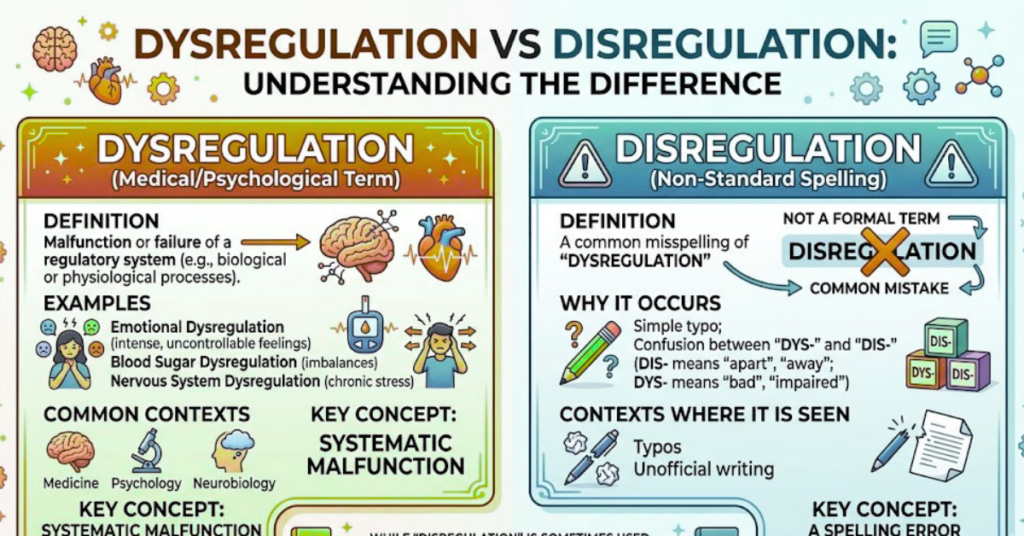
So when comparing dysregulation vs disregulation, only “dysregulation” is recognized in standard English.
What Does “Dysregulation” Mean?
“Dysregulation” is widely used in psychology, medicine, and biology.
Definition
- A disruption or impairment in the normal regulation of a system
It refers to when something that should be controlled or balanced is not functioning properly.
Common Uses of Dysregulation
You’ll often see this term in professional and academic contexts.
Emotional Dysregulation
- Difficulty managing emotions
- Overreacting or underreacting to situations
Example:
- Emotional dysregulation can make stress harder to manage
Biological or Physical Dysregulation
- Hormonal imbalance
- Nervous system issues
Example:
- Sleep dysregulation affects overall health
Behavioral Dysregulation
- Trouble controlling actions or impulses
Example:
- Behavioral dysregulation is often discussed in child development
Why “Disregulation” Is Incorrect
“Disregulation” might look logical, but it’s not standard English.
Why the Mistake Happens
- Confusion between prefixes “dis-” and “dys-”
- Similar structure to other words like “disagreement”
- Typing or spelling errors
Key Point
- “Dis-” usually means “not” or “opposite”
- “Dys-” means “impaired” or “abnormal”
Since the correct meaning relates to impaired regulation, “dysregulation” is the accurate term.
Dysregulation vs Disregulation Meaning Explained
Here’s a simple breakdown:
- Dysregulation = improper or impaired control
- Disregulation = incorrect or nonexistent word
Understanding this distinction makes it easier to choose the correct spelling every time.
How to Remember the Correct Spelling
A few simple tricks can help:
- Think of medical terms like “dysfunction”
- Remember that “dys-” relates to something not working properly
- Avoid guessing based on similar words with “dis-”
- Double-check when writing formal content
These habits make a big difference in accuracy.
Common Mistakes to Avoid
Even careful writers can slip up.
Watch Out For
- Writing “disregulation” in academic or professional contexts
- Assuming both spellings are acceptable
- Confusing prefixes with different meanings
Sticking with the correct form ensures clarity and credibility.
When to Use Dysregulation in Writing
Use “dysregulation” in contexts involving imbalance or impaired control.
Appropriate Situations
- Psychology and mental health discussions
- Medical or biological explanations
- Research and academic writing
Example:
- Emotional dysregulation can impact daily functioning
FAQs
What is the difference between dysregulation vs disregulation?
“Dysregulation” is the correct term, while “disregulation” is a misspelling.
Is “disregulation” ever correct?
No, it is not recognized as a standard English word.
What does dysregulation mean?
It refers to impaired or abnormal regulation of a system, such as emotions or bodily functions.
Why do people confuse these words?
Because of similar prefixes and spelling patterns like “dis-” and “dys-.”
Where is dysregulation commonly used?
It is often used in psychology, medicine, and academic writing.
Conclusion
When it comes to dysregulation vs disregulation, the answer is straightforward: only “dysregulation” is correct. The confusion comes from similar prefixes, but understanding their meanings makes the difference clear.
Whether you’re writing about mental health, biology, or general concepts of imbalance, using the correct term ensures your message is accurate and professional. Keep this distinction in mind, and you’ll avoid a common but easy-to-fix mistake.