Saying safe travel wishes is one of the most common and heartfelt ways we show care for someone going on a journey. Whether it’s a short road trip or an international flight, this simple phrase carries warmth and emotional connection.
The expression safe travel wishes (often said as have a safe trip) is used globally to express hope that someone reaches their destination safely and comfortably. In this guide, you’ll learn its meaning, how to use it, translations like have a safe trip in Spanish, and even creative alternatives for everyday conversations.
What Do Safe Travel Wishes Mean?
Safe travel wishes are expressions of care given before someone travels. They generally mean:
- Wishing someone a smooth journey
- Hoping for their safety during travel
- Showing emotional support before departure
It’s a simple phrase, but it reflects kindness and human connection in everyday life.
When to Use Safe Travel Wishes
You can use safe travel wishes in many situations:
Air Travel
Before flights, especially long-distance international trips.
Road Trips
When someone is driving or traveling by bus.
Business Travel
Common in professional environments before conferences or meetings.
Everyday Messages
Used in texts, calls, or social media comments.
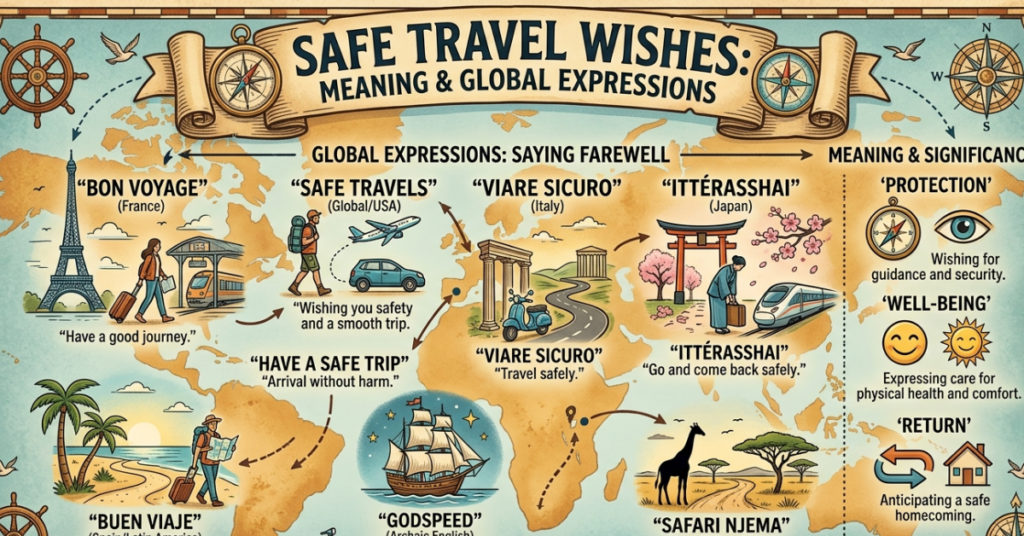
How to Say Safe Travel Wishes in Spanish
If you want to express safe travel wishes in another language, Spanish is one of the most searched translations.
🇪🇸 Spanish Translation
“Que tengas un viaje seguro”
Other natural variations include:
- “Buen viaje” (Have a good trip)
- “Viaja con cuidado” (Travel carefully)
These phrases are widely used across Spanish-speaking countries.
Creative Alternatives to Safe Travel Wishes
Instead of repeating the same phrase, you can use these natural alternatives:
- Wishing you a smooth and peaceful journey
- Travel safely and enjoy your time
- Hope you reach your destination safely
- Take care and have a great trip
- Safe journey and see you soon
These expressions feel more personal and emotionally rich.
Why Travel Wishes Are Important Emotionally
Even a short message can have a strong emotional impact. Safe travel wishes:
- Show genuine care and concern
- Strengthen relationships
- Reduce travel anxiety
- Add emotional warmth to goodbyes
In today’s digital world, small gestures like this matter more than ever.
Have a Safe Trip Images and Digital Sharing
People often share travel wishes visually through social media.
Common types of travel-themed images:
- Airport and airplane backgrounds
- Road trip scenery
- Sunset travel aesthetics
- Suitcase and passport visuals
These visuals make messages more engaging and suitable for platforms like Instagram and WhatsApp.
How to Respond to Travel Wishes
If someone sends you a travel blessing, you can reply politely:
- Thank you, I really appreciate it
- I will, thanks for the kind wishes
- Means a lot, I’ll be safe
- Thanks, talk soon
FAQs
1. What are safe travel wishes?
They are kind messages sent to someone before they travel to wish them safety and a smooth journey.
2. How do you say safe travel wishes in Spanish?
You can say “Que tengas un viaje seguro.”
3. Are travel wishes formal or informal?
They can be used in both formal and casual situations.
4. What are alternatives to safe travel wishes?
You can say “have a good journey,” “travel safely,” or “take care on your trip.”
5. Why do people share travel images with wishes?
Because visuals make emotional messages more engaging and shareable online.
Conclusion
Safe travel wishes are more than just words — they are expressions of care, connection, and positivity. Whether you say it directly, translate it into another language like have a safe trip in Spanish, or share visuals like have a safe trip images, the message remains powerful and universal.
Next time someone is heading out, choose your words thoughtfully and make your wish feel personal, warm, and meaningful.