You’ve probably seen people use “emasculate vs demasculate” interchangeably—but here’s the truth: one is correct, and the other is basically a linguistic imposter. If you’re serious about writing or speaking clearly, this is a mistake you can’t afford to keep making.
In this guide, we’ll break down the real meaning of emasculate, explain why demasculate isn’t standard English, and show you how to use the correct term with confidence.
What Does “Emasculate” Mean?
Emasculate is a legitimate English word with a long history. It comes from Latin emasculare, meaning “to make unmanly.”
Common meanings of emasculate:
- Literal (rare today): To castrate or remove male characteristics physically
- Figurative (common):
- To weaken someone’s strength, power, or confidence
- To undermine masculinity or authority
Example sentences:
- The harsh criticism emasculated his confidence during the meeting.
- Some argue that strict rules can emasculate creativity in teams.
Related LSI keywords:
- weaken authority
- reduce strength
- undermine confidence
- strip power
Is “Demasculate” a Real Word?
Here’s where people get tripped up.
“Demasculate” is not considered standard English. It’s often used mistakenly because:
- The prefix “de-” usually means “remove” or “reverse”
- People assume it works like “deactivate” or “devalue”
But English doesn’t follow that logic here.
Why “demasculate” is incorrect:
- It doesn’t appear in most reputable dictionaries
- It’s considered a misuse or nonstandard variation
- It adds no new meaning beyond what emasculate already covers
Bottom line:
If you use “demasculate” in formal writing, it weakens your credibility—ironically, it emasculates your authority as a writer.
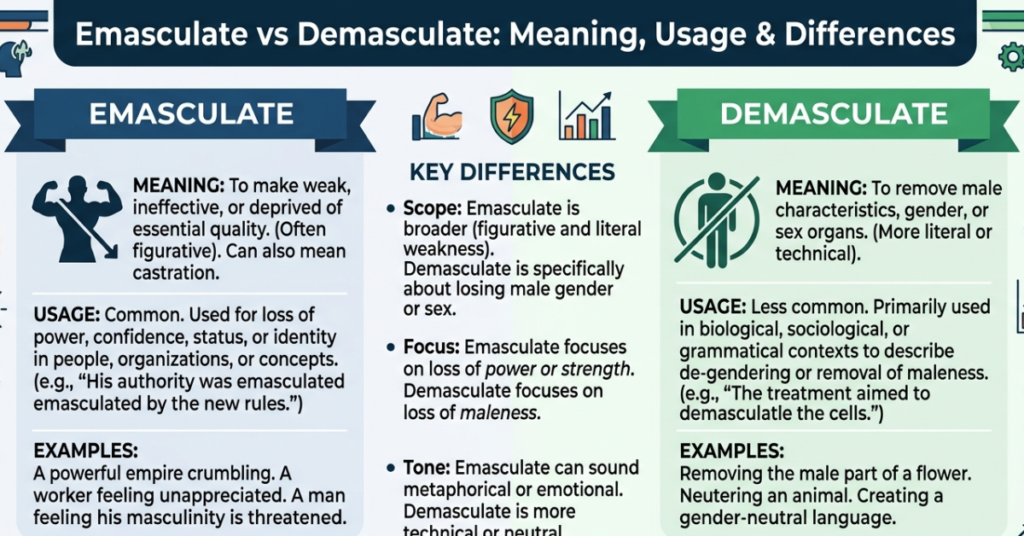
Emasculate vs Demasculate: Key Differences
| Feature | Emasculate | Demasculate |
| Valid word | Yes | No (nonstandard) |
| Meaning | To weaken or strip power | Misused version of emasculate |
| Usage | Formal and informal contexts | Avoid in all contexts |
| Dictionary status | Widely recognized | Rarely or not listed |
Why Do People Confuse These Terms?
1. Misunderstanding Prefixes
People assume “de-” must be correct because it often signals removal. But language isn’t always logical—it’s historical.
2. Sound Similarity
“Demasculate” sounds like it should exist. That’s enough for many people to adopt it without checking.
3. Informal Usage Online
Social media and casual writing have spread the incorrect form, making it look more acceptable than it actually is.
When and How to Use “Emasculate” Properly
To use emasculate effectively, focus on context.
Use it when describing:
- Loss of power or authority
- Emotional weakening
- Reduction in effectiveness
Good usage examples:
- The policy changes emasculated the manager’s decision-making power.
- Constant interruptions can emasculate productivity.
Avoid overuse:
This word carries strong connotations. Use it when the situation genuinely calls for it—not just for dramatic effect.
Alternatives to “Emasculate”
If the tone feels too strong, here are better options:
- Weaken
- Undermine
- Diminish
- Reduce
- Erode
These alternatives can make your writing more precise and less emotionally charged.
Common Mistakes to Avoid
- Using “demasculate” in essays or professional writing
- Assuming both words are interchangeable
- Overusing “emasculate” in casual contexts
Stick to clarity over complexity.
FAQs
1. Is “demasculate” ever correct?
No. It’s considered nonstandard and should be avoided in both formal and informal writing.
2. Why do people still use “demasculate”?
Mostly due to confusion with prefixes and imitation from others online.
3. Can “emasculate” be offensive?
Yes, depending on context. It can carry gender-related implications, so use it carefully.
4. What’s a safer alternative to “emasculate”?
Words like “weaken,” “undermine,” or “diminish” are often more neutral.
5. Is “emasculate” only about masculinity?
Not always. In modern usage, it often refers broadly to reducing strength or effectiveness.
Conclusion
When it comes to emasculate vs demasculate, the answer is simple:
- Emasculate is correct.
- Demasculate is not.
If you want your writing to be sharp, credible, and taken seriously, cut out the confusion and stick with the right word. Language isn’t just about sounding smart—it’s about being precise.