“How’s your day going?”—you’ve heard it a thousand times. It’s one of the most common conversational phrases in English, yet most people don’t stop to think about how to use it properly or respond in a way that actually connects.
At its core, “how’s your day going” is more than small talk. It’s a social tool. Used right, it builds rapport, keeps conversations flowing, and even strengthens relationships—whether you’re chatting with a friend, colleague, or someone new.
This guide breaks down everything you need to know: meaning, variations, smart replies, and even how to say it in Spanish.
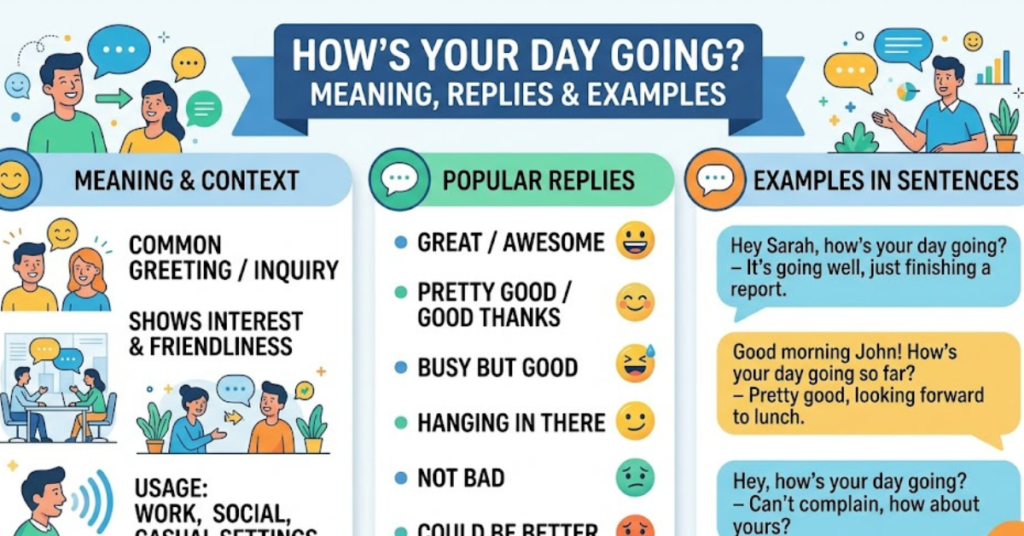
What Does “How’s Your Day Going?” Really Mean?
This phrase is a casual way of asking about someone’s current experience or mood during the day. It’s less formal than “How are you?” and more specific because it focuses on today.
Key Intent Behind the Question:
- Checking in on someone’s mood
- Starting a conversation
- Showing politeness or interest
- Filling a social gap (especially in workplaces)
In most cases, people don’t expect a long answer—but that doesn’t mean your reply should be lazy.
How’s Your Day Going So Far: When to Use It
Adding “so far” changes the tone slightly.
Example:
- “How’s your day going so far?”
This version implies:
- The day isn’t over yet
- Things could still change
- The speaker is more engaged in your answer
Use it in:
- Work environments
- Midday conversations
- Casual check-ins with friends
How to Reply to “How’s Your Day Going?” (Smart Answers)
Let’s be honest—most people default to “good” or “fine.” That’s safe, but it’s also forgettable. If you want better conversations, your replies need a bit more substance.
Simple Replies (Neutral)
- “Pretty good, just keeping busy.”
- “Not bad, just a regular day.”
Positive Replies (Engaging)
- “Great actually—I got a lot done today.”
- “It’s going really well so far, can’t complain.”
Honest Replies (Real but Controlled)
- “Bit hectic, but I’m managing.”
- “Could be better, but I’ll get through it.”
Conversation-Extending Replies
These are the ones that actually build connection:
- “Good so far—how about yours?”
- “Busy day, but I’m learning a lot. What about you?”
Rule: Always give a little detail + return the question.
How’s Your Day Going in Spanish
If you’re dealing with Spanish speakers, knowing this phrase helps instantly.
Common Translations:
- “¿Cómo va tu día?” (casual, most common)
- “¿Cómo está tu día?” (slightly more formal)
- “¿Qué tal tu día?” (very natural, conversational)
Example:
- “¿Cómo va tu día?” = “How’s your day going?”
Keep it simple. Overcomplicating basic phrases makes you sound unnatural.
Why This Question Matters More Than You Think
You might see it as filler talk, but it plays a bigger role in communication.
Benefits:
- Builds trust quickly
- Opens doors for deeper conversations
- Signals emotional awareness
- Makes interactions less awkward
In professional settings, it can:
- Improve workplace relationships
- Make networking easier
- Help you stand out as approachable
Common Mistakes to Avoid
Let’s clean this up—most people get lazy here.
1. Giving One-Word Replies
“Good.”
That kills the conversation instantly.
2. Oversharing
Don’t dump your entire day unless the person actually cares.
3. Not Asking Back
If you don’t return the question, it feels one-sided.
4. Using the Same Reply Every Time
You sound robotic. Switch it up.
Pro Tips to Sound Natural and Confident
If you want to stand out (not just blend in), do this:
- Add a detail: “Good—just finished a workout.”
- Show emotion: “Pretty productive day, feeling good.”
- Mirror tone: match how casual or formal the other person is
- Keep it short but meaningful
FAQs
What does “how’s your day going?” mean?
It’s a casual way to ask how someone is feeling or what they’re experiencing during their day.
Is “how’s your day going” formal or informal?
It’s informal. Use it in casual conversations, not formal emails.
How do you respond politely?
Give a short, honest answer and ask back:
“Good so far, how about you?”
How’s your day going in Spanish?
“¿Cómo va tu día?” is the most natural translation.
Can it be used in professional settings?
Yes—but keep your reply balanced. Friendly, not overly personal.
Conclusion
“How’s your day going?” looks simple, but it’s a powerful communication tool when used properly. The difference between a dull interaction and a meaningful one often comes down to how you respond.
Stop giving lazy answers. Add a little detail, match the tone, and keep the conversation moving. That’s how you turn small talk into real connection.