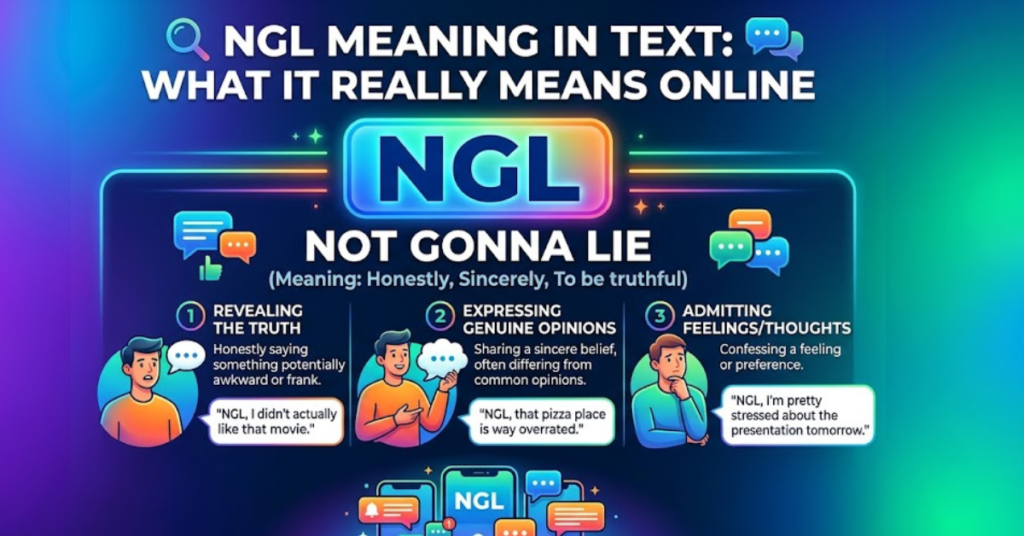
If you’ve ever scrolled through social media or read a casual message and seen “NGL,” you’re not alone. The phrase pops up everywhere—from texting to platforms like Instagram and Snapchat. So, what exactly is the NGL meaning in text, and why has it become so popular?
In simple terms, “NGL” stands for “Not Gonna Lie.” It’s used to express honesty, often before sharing a blunt opinion or a genuine feeling. But there’s more to it than just that. Understanding how and when to use it can help you communicate more naturally in today’s digital world.
What Does NGL Mean in Text?
The NGL meaning in text is straightforward:
NGL = Not Gonna Lie
People use it to signal that what they’re about to say is honest, sometimes surprisingly so.
Example Usage:
- NGL, that movie was better than I expected.
- NGL, I’m tired of this weather.
It works like a soft introduction to an opinion—especially one that might be unexpected or slightly bold.
Why Do People Use NGL?
Let’s be real—online conversations can feel fake or overly polished. That’s where NGL comes in.
Key Reasons People Use It:
- To sound honest: It signals authenticity.
- To soften opinions: Makes blunt statements feel less harsh.
- To connect socially: Feels casual and relatable.
- To emphasize sincerity: Adds emotional weight to a statement.
Think of it as a shortcut for saying, “I’m being real with you right now.”
How NGL Is Used in Different Contexts
The NGL meaning in text can shift slightly depending on the situation.
1. Casual Conversations
Used among friends to share thoughts openly.
- NGL, your idea is actually pretty smart.
2. Social Media Posts
Often used in captions or comments.
- NGL, this outfit turned out great.
3. Humor and Sarcasm
Sometimes it’s used playfully.
- NGL, I thought I’d be rich by now.
4. Honest Confessions
Used to admit something personal.
- NGL, I miss those days.
When to Use NGL (And When Not To)
You don’t want to throw “NGL” into every sentence—it loses impact fast.
Use NGL When:
- You’re sharing a genuine opinion
- You want to sound relatable
- You’re being slightly vulnerable
Avoid Using NGL When:
- In formal writing (emails, reports)
- In professional communication
- When clarity matters more than tone
Bottom line: It’s great for casual settings, not serious ones.
Similar Slang Terms to NGL
To better understand the NGL meaning in text, it helps to compare it with similar expressions:
- TBH (To Be Honest): Very similar, slightly more common
- IMO (In My Opinion): More neutral, less emotional
- FR (For Real): Emphasizes truth or agreement
- Low-key: Suggests subtle honesty
Each has its own tone, but “NGL” stands out for itsconversational feel.
Is NGL Always Honest?
Here’s where it gets interesting.
While “NGL” signals honesty, it doesn’t guarantee it. Sometimes people use it:
- To sound more genuine than they actually are
- To make opinions seem stronger
- As a habit rather than intentional honesty
So yes, it implies truth—but context always matters.
The Rise of NGL in Digital Culture
The popularity of the NGL meaning in text reflects a bigger shift—people want more real, less filtered communication online.
Apps, memes, and even anonymous Q&A platforms have pushed this trend. Users are drawn to honesty, even if it’s imperfect or blunt.
FAQs About NGL Meaning in Text
1. What does NGL mean in texting?
NGL means “Not Gonna Lie,” used to express honesty before sharing an opinion.
2. Is NGL rude?
Not necessarily. It depends on the tone and context. It can soften blunt statements rather than make them rude.
3. Can I use NGL in professional communication?
No. It’s best avoided in formal or workplace settings.
4. What’s the difference between NGL and TBH?
Both mean honesty, but “TBH” is more neutral, while “NGL” feels more casual and conversational.
5. Why do people say NGL so much?
Because it helps them sound real, relatable, and less filtered in digital conversations.
Conclusion
The NGL meaning in text goes beyond just “Not Gonna Lie.” It’s a cultural signal—a way of saying, “This is real.” Whether you’re texting a friend or posting online, it adds a layer of honesty that people naturally connect with.
Use it wisely, though. Overusing it makes it lose impact, and using it in the wrong context can feel out of place. Keep it casual, keep it real—and you’ll use “NGL” exactly the way it’s meant to be used.