Ever typed “sleave” and wondered if it’s actually a real word? You’re not alone. The confusion between sleave or sleeve is surprisingly common, especially for learners of English and even native speakers in a hurry.
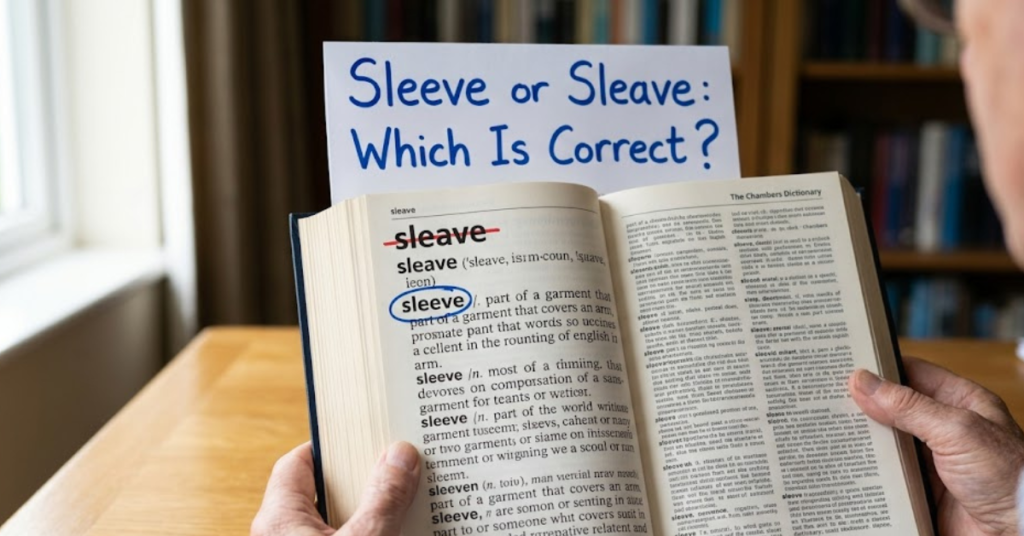
Here’s the straight answer: “sleeve” is correct in modern English.
“Sleave” is either a misspelling or an extremely rare, outdated term you almost never need.
In this guide, we’ll break it down clearly—what sleeve means, why people write sleave, and how to avoid this mistake for good.
What Does “Sleeve” Mean?
A sleeve is the part of a garment that covers the arm. Simple, everyday word—but it also has extended meanings.
Common Uses of “Sleeve”
- Clothing: The sleeve of a shirt or jacket
- Figurative: “Wear your heart on your sleeve”
- Technical: Protective coverings (e.g., cable sleeves)
Example Sentences
- She rolled up her sleeves before starting work.
- His shirt had long sleeves.
- He wears his emotions on his sleeve.
Is “Sleave” a Real Word?
Here’s where things get tricky.
The Truth About “Sleave”
- It exists, but it’s extremely rare and outdated.
- Historically, it referred to fine silk thread.
- You might see it in old literature—but almost never in modern usage.
Example (Rare/Old Usage)
- “The sleave of silk” (archaic reference)
Bottom line: In 99.9% of cases, if you wrote sleave, you meant sleeve.
Why People Confuse “Sleave” and “Sleeve”
This mistake usually comes down to a few things:
1. Pronunciation Confusion
Both words sound nearly identical, making it easy to mistype.
2. Typing Errors
Fast typing often drops the second “e” or rearranges letters.
3. Lack of Familiarity
Most people have never seen “sleave” used correctly, so they assume it’s valid.
Sleave or Sleeve: Key Differences
| Feature | Sleeve | Sleave |
| Usage | Common, everyday English | Rare, outdated |
| Meaning | Garment part, coverings | Fine silk thread (archaic) |
| Correct Today? | Yes | Almost never |
How to Remember the Correct Spelling
If you want a quick trick, use this:
“Sleeve has ‘EE’ like ‘see’—because you can SEE your arm in it.”
Or think of it this way:
- Clothes → Common → Sleeve
- Old poetry → Rare → Sleave
Common Phrases Using “Sleeve”
To strengthen your understanding, here are popular expressions:
- Up your sleeve – Hidden advantage
- Wear your heart on your sleeve – Show emotions openly
- Laugh up your sleeve – Laugh secretly
These are widely used and always use sleeve, never sleave.
When (If Ever) Should You Use “Sleave”?
Honestly? Almost never.
You might encounter it:
- In classic literature
- In historical texts
- In poetic or stylized writing
Otherwise, avoid it. Using sleave in modern writing can make your content look like a mistake.
SEO Tip: Using “Sleave or Sleeve” Correctly
If you’re writing content (like this article), include the keyword naturally:
- Early in the introduction
- In subheadings
- In the conclsion
But don’t overuse it. Google prefers clarity over repetition.
FAQs About Sleave or Sleeve
1. Is “sleave” a misspelling of “sleeve”?
Most of the time, yes. In modern writing, it’s considered a mistake.
2. Which spelling should I use in everyday English?
Always use sleeve.
3. Why does “sleave” appear in some texts?
It’s an old word related to silk thread, mostly found in historical or literary contexts.
4. Is “sleave” accepted in dictionaries?
Yes, but labeled as archaic or rare.
5. How can I avoid this mistake?
Proofread your writing and remember: clothing = sleeve.
Conclusion
When it comes to sleave or sleeve, there’s really no competition.
Sleeve is the correct, modern, and widely accepted spelling you should use in everyday writing.
“Sleave,” while technically a word, belongs to a different era and has little practical use today.
If you want clean, professional, and SEO-friendly content, stick with sleeve—every time.