Ever heard someone say “well said” and wondered what they truly meant? The phrase well said meaning goes beyond simple agreement—it reflects appreciation for clarity, insight, or powerful expression. Whether used in conversations, speeches, or online comments, it signals that someone communicated an idea effectively.
In this guide, you’ll break down what “well said” actually means, when to use it, and how it compares to phrases like “very well said” and “well done is better than well said.”
What Does “Well Said” Mean?
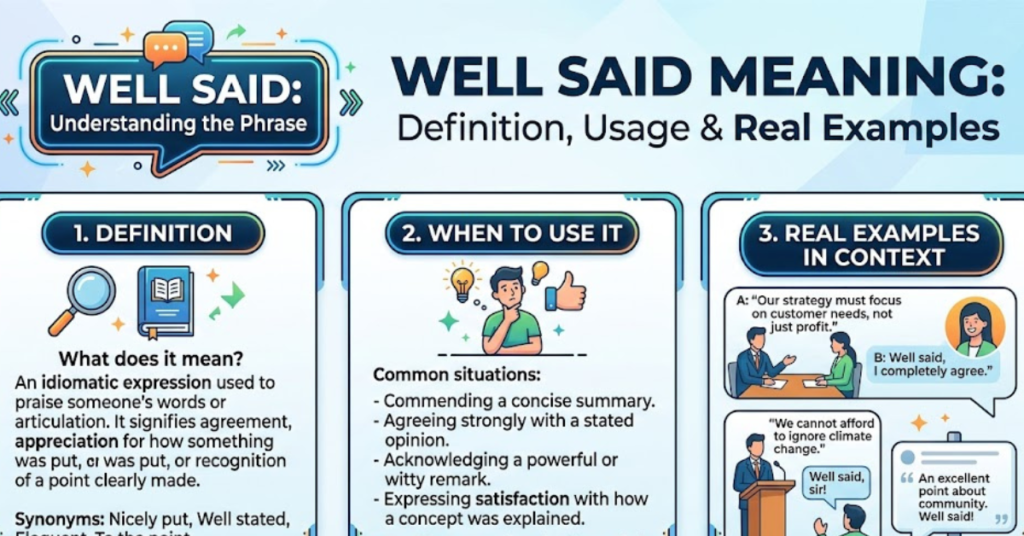
At its core, “well said” is a phrase used to praise someone for expressing an idea clearly, effectively, or thoughtfully.
Simple Definition:
- Well said meaning: A way to acknowledge that someone has expressed something in a clear, accurate, or impactful way.
When People Use It:
- After a strong argument or opinion
- During speeches or presentations
- In online discussions or comments
- When someone perfectly captures a shared thought
Example:
“That explanation about teamwork was spot on—well said!”
“Very Well Said” Meaning: Is There a Difference?
The phrase “very well said” simply adds emphasis.
Key Difference:
- Well said = Good expression
- Very well said = Exceptional expression
It shows stronger agreement or admiration.
Example:
“Your point about honesty in leadership—very well said.”
Think of it as upgrading your praise from “good” to “impressive.”
Where Did “Well Said” Come From?
The phrase has roots in traditional English speech, where acknowledging someone’s words was a form of respect. Over time, it became common in:
- Formal speeches
- Debates
- Literature
- Everyday conversation
Today, it’s widely used both offline and online, especially in comments and social media.
How to Use “Well Said” Correctly
1. In Conversations
Use it when someone expresses a thought clearly.
“You explained that perfectly—well said.”
2. In Writing or Comments
Common in blogs, forums, and social media.
“This article highlights real issues. Well said!”
3. In Professional Settings
Useful in meetings or presentations.
“That summary of the project risks was well said.”
Similar Phrases You Can Use
If you don’t want to repeat “well said,” here are alternatives:
- Exactly right
- Well put
- Spot on
- Couldn’t have said it better
- That’s a great point
These variations help keep your communication natural and engaging.
“Well Done Is Better Than Well Said” Meaning
This famous phrase emphasizes action over words.
Meaning Breakdown:
- Talking nicely is good
- Taking action is better
Well done is better than well said meaning:
Actions matter more than words—doing something meaningful outweighs simply speaking about it.
Real-Life Example:
- Saying “we should help others” = well said
- Actually helping others = well done
This phrase is often used to push people toward action rather than just discussion.
Why “Well Said” Matters in Communication
Using phrases like “well said” isn’t just polite—it builds better conversations.
Benefits:
- Encourages meaningful dialogue
- Shows active listening
- Builds respect and connection
- Reinforces good communication
It’s a small phrase, but it carries social value.
Common Mistakes to Avoid
Overusing It
If you say “well said” too often, it loses impact.
Using It Without Meaning
Don’t use it just to agree—use it when something is genuinely expressed well.
Confusing It with “Well Done”
- Well said = praising words
- Well done = praising actions
FAQs
1. What is the exact well said meaning?
It means acknowledging that someone has expressed an idea clearly, effectively, or impressively.
2. Is “well said” formal or informal?
It works in both. It’s flexible enough for casual chats and professional settings.
3. What does “very well said” mean?
It’s a stronger version of “well said,” showing greater admiration.
4. Can I use “well said” in emails?
Yes, especially in professional or appreciative responses.
5. Who said “well done is better than well said”?
The quote is often attributed to Benjamin Franklin, emphasizing action over words.
Conclusion
Understanding the well said meaning helps you communicate more thoughtfully and respond with intention. It’s not just about agreeing—it’s about recognizing clarity, insight, and effective expression. Meanwhile, phrases like “very well said” add emphasis, and “well done is better than well said” reminds you to back words with action.
If you want to communicate smarter, start noticing how people express ideas—and don’t hesitate to acknowledge it when they do it right.