Ever typed “I am loosing weight” and wondered if it looks right? You’re not alone. The confusion between loosing or losing is one of the most common spelling mistakes in English—and it quietly slips into emails, essays, and even professional content.
Here’s the deal: “losing” is almost always the word you want, while “loosing” is rarely used in everyday writing. In this guide, we’ll break it down in plain English so you never second-guess yourself again.
Loosing or Losing — The Quick Answer
If you’re in a hurry, remember this:
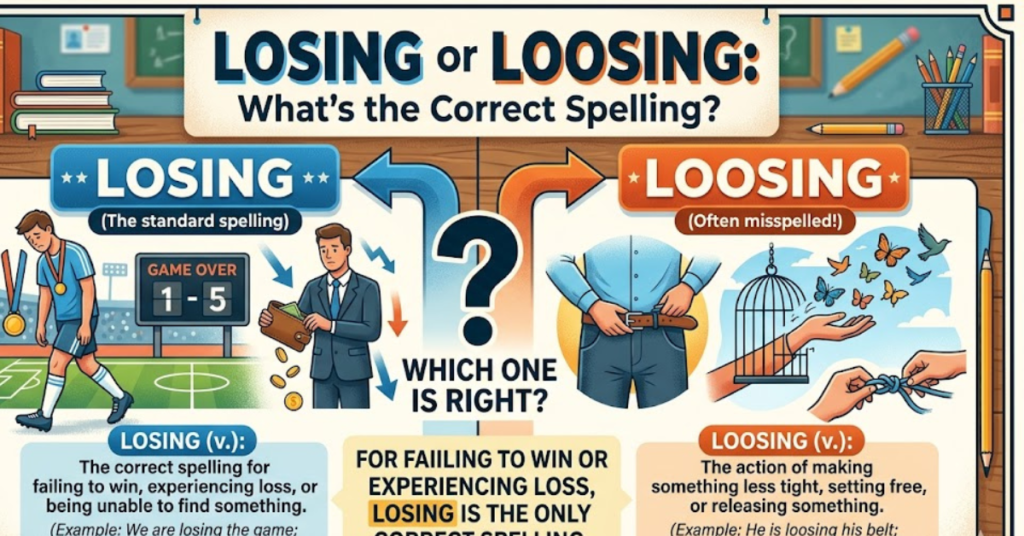
- Losing = to no longer have something
- Loosing = to loosen or release something (rare usage)
So when asking “is it loosing or losing?”, the correct choice in most cases is losing.
What Does “Losing” Mean?
“Losing” is the present participle of “lose.” It means you no longer have something, whether it’s physical, emotional, or abstract.
Common Uses of Losing
You’ll use “losing” in situations like:
- Misplacing something
- I keep losing my keys.
- Failing to win
- They are losing the match.
- Reduction or decline
- She is losing weight.
Why “Losing” Is So Common
The reason this spelling dominates is simple: most everyday situations involve loss, not release. That’s why “losing” shows up far more often in writing and speech.
What Does “Loosing” Mean?
Now let’s talk about the odd one out: “loosing.”
“Loosing” comes from the verb “loose,” which means to release, set free, or make less tight.
Examples of Loosing
- He is loosing the arrow from his bow.
- The workers are loosing the ropes.
Notice something? These are very specific, almost poetic or technical situations. That’s why most people rarely need this word.
Loosing vs Losing — Key Differences
Let’s make it crystal clear:
| Word | Meaning | Usage Frequency |
| Losing | To misplace, fail, or reduce | Very common |
| Loosing | To release or loosen something | Rare |
If you’re unsure, ask yourself:
Am I talking about losing something?
If yes, go with losing—no debate.
Why People Confuse “Loosing or Losing”
This mistake isn’t random. There are a few solid reasons behind it:
1. Double “O” Confusion
Words like “too” and “soon” make people think “loosing” might be correct.
2. Pronunciation Overlap
Both words sound similar when spoken quickly.
3. Autocorrect Fails
Sometimes spellcheck doesn’t flag “loosing” because it is technically a real word.
Simple Tricks to Remember the Correct Spelling
You don’t need to memorize grammar rules—just use these quick hacks:
- Losing = Lost something
One “o” = something is gone - Loosing = Loose
Double “o” = relaxed or released - When in doubt, choose losing (you’ll be right 95% of the time)
Real-Life Examples (Correct vs Incorrect)
Let’s fix some common mistakes:
- I am loosing weight.
I am losing weight. - We are loosing the game.
We are losing the game. - He is loosing the rope. (Correct, but rare)
When “Loosing” Is Actually Correct
To be fair, “loosing” isn’t wrong—it’s just uncommon.
You might see it in:
- Literature or historical writing
- Archery or technical contexts
- Formal or poetic language
But unless you’re writing a novel or describing medieval warfare, you probably don’t need it.
SEO Writing Tip — Why This Mistake Matters
If you’re creating content online, mixing up loosing or losing can hurt:
- Your credibility
- User trust
- Search engine rankings
Search engines favor clear, correct language, so fixing this small mistake can make a big difference.
FAQs About “Loosing or Losing”
Is it loosing or losing weight?
It’s losing weight. “Loosing” is incorrect in this context.
Is “loosing” ever correct?
Yes, but only when you mean releasing or loosening something.
Why do people write “loosing” instead of “losing”?
Mostly due to spelling confusion and pronunciation similarities.
Is “losing” always the right choice?
Almost always—especially in everyday conversation and writing.
Conclusion — Stop Guessing, Start Writing Right
Here’s the bottom line:
If you’re debating “loosing or losing,” you probably want losing.
It’s the word used for:
- Misplacing things
- Failing to win
- Declining or reducing
“Loosing” exists, but it lives in a narrow corner of the English language.