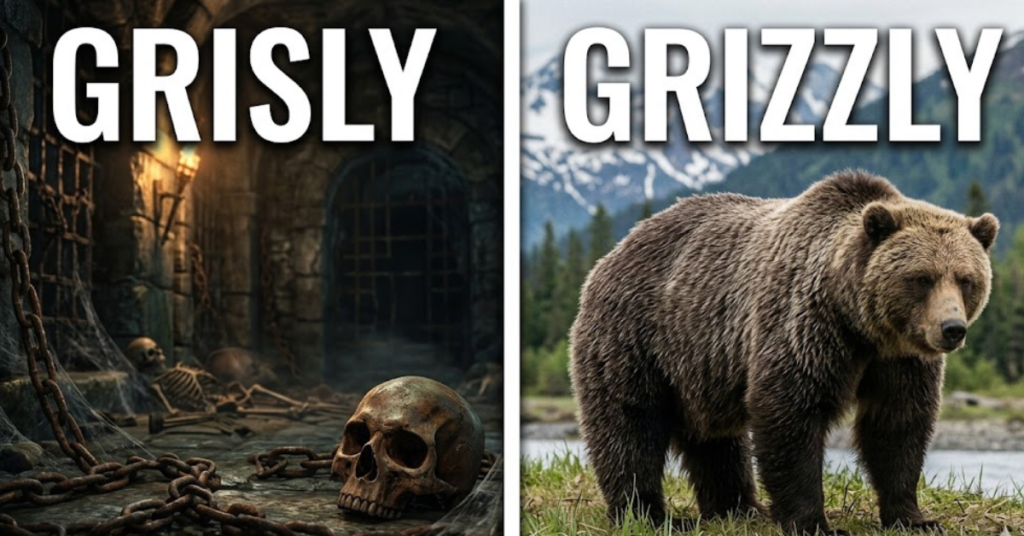
English has plenty of words that sound similar but mean completely different things, and grisly vs grizzly is a perfect example. Many people accidentally swap these words because they look alike and are pronounced similarly in everyday speech. However, their meanings are entirely unrelated.
One word describes something horrifying or gruesome, while the other refers to a famous species of bear. Understanding the distinction can help improve your writing, avoid embarrassing mistakes, and strengthen your vocabulary. This guide breaks down the meanings, grammar, pronunciation, examples, and memory tricks in a simple and engaging way.
Why People Confuse Grisly and Grizzly
The confusion usually comes from three things:
- Similar spelling
- Similar pronunciation
- Frequent use in storytelling and media
Since both words appear in dramatic contexts like movies, books, and news stories, people often mix them up without realizing it.
What Does “Grisly” Mean?
“Grisly” is an adjective used to describe something horrifying, gruesome, or extremely unpleasant.
It often appears in discussions involving:
- Violent crimes
- Horror stories
- Disturbing scenes
- Graphic descriptions
Examples of Grisly
- The detective investigated a grisly murder scene.
- The movie included several grisly moments.
- Reporters described the accident in grisly detail.
In each example, the word suggests something shocking or disturbing.
What Does “Grizzly” Mean?
“Grizzly” usually refers to the grizzly bear, a large North American bear species.
It can also describe something grayish or rough in appearance.
Examples of Grizzly
- We spotted a grizzly bear in the forest.
- The documentary followed a grizzly through the mountains.
- His grizzly beard made him look older.
Most commonly, the word relates to wildlife.
Grisly vs Grizzly Meaning Explained
The easiest way to separate the two words is by meaning.
Grisly
- Means horrifying or gruesome
- Describes disturbing situations
Grizzly
- Refers to a type of bear
- Sometimes describes rough or gray features
Despite their similar sound, the meanings are completely unrelated.
The Origin of “Grisly”
The word “grisly” comes from older Germanic roots connected to fear and terror.
Historically, it has been associated with:
- Horror
- Dread
- Fearful imagery
That connection still exists in modern English.
The Origin of “Grizzly”
“Grizzly” comes from the word “grizzled,” meaning gray-haired or streaked with gray.
Grizzly bears received the name because of:
- Their gray-tipped fur
- Their rough appearance
Over time, the term became strongly associated with the animal itself.
Common Mistakes in Writing
People often accidentally write:
- “grizzly crime scene”
- “grizzly murder”
These phrases are incorrect unless a bear is somehow involved.
Correct Usage
- grisly crime scene
- grisly accident
- grizzly bear
- grizzly wilderness
The context determines which spelling works.
Grisly vs Grizzly in Sentences
Seeing both words side by side helps clarify their usage.
Grisly Examples
- The novel described a grisly battle.
- Police uncovered grisly evidence.
Grizzly Examples
- A grizzly wandered near the campsite.
- The zoo rescued an injured grizzly.
One word involves horror, while the other involves wildlife.
Pronunciation Differences
In casual conversation, the words sound very similar.
Grisly
Often pronounced like:
- “griz-lee”
Grizzly
Usually pronounced almost the same way.
Because pronunciation overlap is so strong, spelling mistakes are extremely common.
Easy Memory Tricks
Simple associations make these words easier to remember.
Remember “Grizzly” Has a Bear
The double “zz” can remind you of something large and heavy, like a bear.
Think:
- Grizzly bear
Remember “Grisly” Relates to Horror
“Grisly” sounds darker and sharper, which matches its frightening meaning.
Think:
- Grisly crime
- Grisly scene
These memory tricks help reduce confusion quickly.
How These Words Appear in Media
Movies, documentaries, and news reports frequently use both words.
“Grisly” in News Reporting
Journalists use it to describe:
- Violent incidents
- Graphic discoveries
- Disturbing events
“Grizzly” in Nature Content
Wildlife programs use it when discussing:
- Bears
- Forest habitats
- Animal behavior
Because both appear in dramatic contexts, people sometimes blur the distinction.
Why Correct Usage Matters
Using the wrong word can completely change a sentence’s meaning.
For example:
- “A grisly bear” sounds like a horrifying bear.
- “A grizzly bear” correctly identifies the animal species.
Correct spelling improves clarity and professionalism.
Grammar Role of Each Word
Both words usually function as adjectives.
Grisly as an Adjective
- grisly details
- grisly discovery
Grizzly as an Adjective or Noun
- grizzly bear
- a grizzly attacked the camp
Understanding grammar roles helps avoid misuse.
Common Expressions Using Grisly
You’ll often see “grisly” paired with words like:
- murder
- accident
- discovery
- crime
- scene
These combinations emphasize horror or shock.
Common Expressions Using Grizzly
“Grizzly” frequently appears with:
- bear
- wilderness
- forest
- mountain
- wildlife
The context usually involves nature or animals.
FAQs
What is the difference between grisly and grizzly?
“Grisly” means horrifying or gruesome, while “grizzly” refers to a type of bear.
Is it grisly bear or grizzly bear?
The correct phrase is “grizzly bear.”
Can grisly describe a person?
Yes. It can describe something frightening or disturbing related to a person or situation.
Why do people confuse grisly and grizzly?
The words have similar spelling and pronunciation, which makes mix-ups common.
Is grizzly always about bears?
Mostly yes, though it can also describe something grayish or rough-looking.
Is grisly a negative word?
Yes. It almost always describes unpleasant, shocking, or disturbing situations.
Conclusion
Understanding grisly vs grizzly is easier once you focus on meaning instead of sound. “Grisly” describes something horrifying or gruesome, while “grizzly” usually refers to the famous North American bear species. Although the words are pronounced similarly, their definitions are entirely different.
Learning the distinction helps improve grammar accuracy, writing clarity, and overall communication skills. Small vocabulary differences like this may seem minor, but they can dramatically affect how professional and polished your writing appears.
The next time you encounter one of these words, simply remember: grisly belongs in horror stories, while grizzly belongs in the wilderness.