Some words sound so similar that they trick even confident writers. If you’ve ever paused while typing sense vs since, you’re not alone. These two words are often confused because they sound alike, but their meanings are completely different.
In this guide, we’ll break down the sense vs since meaning, explain when to use each word, and provide clear examples so you can avoid this common mistake with ease.
Sense vs Since: What’s the Difference?
Let’s simplify it right away.
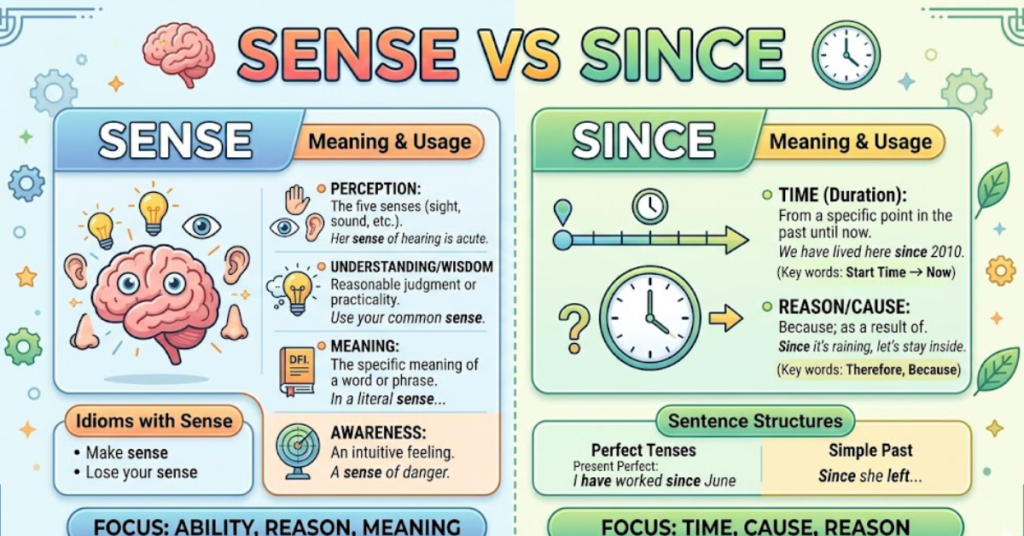
- Sense relates to feeling, understanding, or perception
- Since relates to time or cause
Understanding the sense vs since definition is key to using them correctly in everyday writing.
What Does “Sense” Mean?
“Sense” is a noun or verb that refers to perception or understanding.
Common Meanings
- One of the five human senses (sight, smell, etc.)
- A feeling or intuition
- Logical understanding
Examples
- I had a sense that something was wrong
- This idea makes no sense
- She can sense danger quickly
These sense vs since examples show how “sense” is connected to awareness or meaning.
What Does “Since” Mean?
“Since” is a conjunction, preposition, or adverb used in relation to time or reason.
Common Meanings
- From a specific time in the past until now
- Because or as a reason
Examples
- I have lived here since 2020
- Since you’re here, let’s start
- It has been quiet since morning
This explains the sense vs since meaning clearly—“since” is about time or cause, not feeling.
When to Use Sense vs Since
Knowing when to use each word becomes easy with a simple rule.
Use “Sense” When
- Talking about feelings or intuition
- Referring to understanding or logic
- Describing perception
Use “Since” When
- Referring to time (from past to present)
- Giving a reason or explanation
This answers the common question: when to use sense vs since.
Sense vs Since Examples in Sentences
Let’s look at clear comparisons.
Correct Usage
- That doesn’t make sense
- I’ve known him since childhood
- She sensed something unusual
- Since it’s raining, we’ll stay inside
Incorrect Usage
- That doesn’t make since
- I’ve known him sense childhood
These examples highlight the sense vs since examples and show how using the wrong word changes the meaning.
Common Confusions: Sence vs Sense vs Since
You might also see other variations like “sence.”
What You Should Know
- Sense is correct
- Since is correct
- Sence is incorrect
So in sence vs sense vs since, only “sense” and “since” are valid words.
Why People Mix Them Up
The confusion is very common.
Main Reasons
- They sound almost identical
- Fast typing leads to mistakes
- Spell-check may not catch context errors
Because both are real words, the mistake often goes unnoticed.
Quick Tips to Remember the Difference
Here are simple tricks to keep them straight:
- Sense = feeling or understanding
- Since = time or reason
- “Since” often relates to time (think “since yesterday”)
- “Sense” relates to logic (think “makes sense”)
These small memory cues make a big difference.
Common Mistakes to Avoid
Even experienced writers slip up.
Watch Out For
- Writing “since” when you mean “sense”
- Using “sense” in time-related sentences
- Ignoring context while proofreading
Always check if the sentence is about time or meaning.
FAQs
What is the difference between sense or since?
“Sense” relates to feeling or understanding, while “since” refers to time or reason.
Is “sence” a correct word?
No, “sence” is a misspelling.
When should I use “since”?
Use it when referring to time or giving a reason.
When should I use “sense”?
Use it when talking about meaning, logic, or perception.
Why are sense and since confusing?
Because they sound similar but have different meanings.
Conclusion
Understanding sense vs since comes down to recognizing their roles in a sentence. “Sense” is all about feeling, perception, and meaning, while “since” deals with time and cause.
The key takeaway is simple: if your sentence is about logic or understanding, use “sense.” If it’s about time or reason, use “since.” Once you get comfortable with this distinction, you’ll avoid one of the most common word mix-ups and write with greater clarity and confidence.