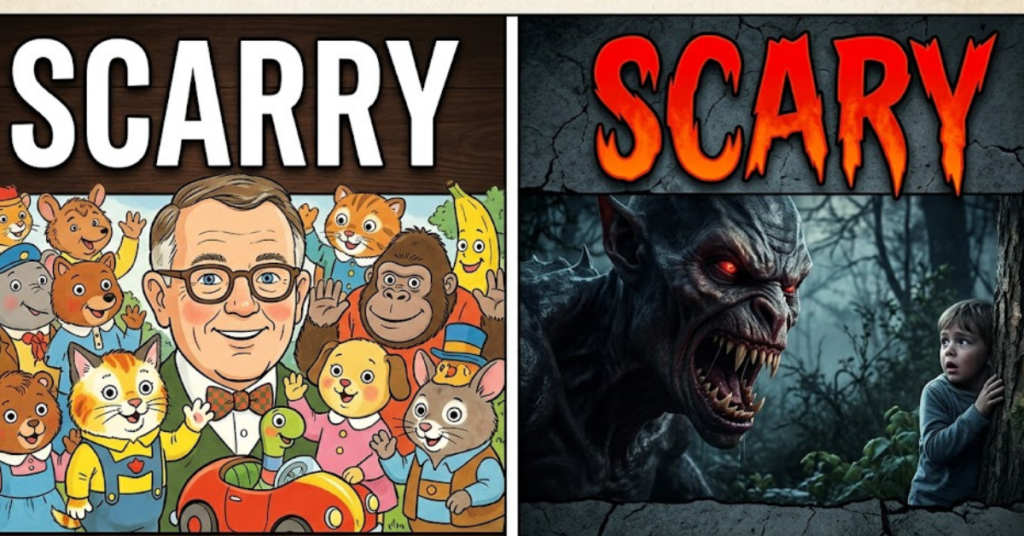
English spelling mistakes happen to everyone, especially when words sound exactly the same. One of the most commonly confused spellings people search online is scarry or scary. At first glance, both versions may seem reasonable, but only one is officially correct in standard English.
Whether you’re writing a text message, school paper, social media caption, or blog post, knowing the proper spelling helps your writing appear more polished and professional. This guide explains the correct usage, meaning, grammar, pronunciation, examples, and memory tricks in a simple and conversational way.
Which Is Correct: Scarry or Scary?
The correct spelling is:
- Scary
The word “scarry” is considered a misspelling in standard English.
Correct Example
- That movie was really scary.
Incorrect Example
- That movie was really scarry.
Although many people accidentally add an extra “r,” dictionaries and grammar guides recognize only “scary” as the proper spelling.
What Does “Scary” Mean?
“Scary” is an adjective used to describe something frightening, alarming, or capable of causing fear.
It often refers to:
- Horror movies
- Dangerous situations
- Creepy stories
- Nervous experiences
Examples of Scary
- The haunted house looked scary.
- Flying during a storm can feel scary.
- That was a scary dream.
The word expresses fear or uneasiness.
Why Do People Spell It “Scarry”?
The mistake usually happens because of pronunciation and spelling patterns in English.
People often assume:
- One vowel + strong sound = doubled consonant
English includes many words with double letters, such as:
- running
- bigger
- swimmer
Because of this pattern, some writers incorrectly add an extra “r” to “scary.”
Scarry or Scary Meaning Explained
The search phrase scarry or scary meaning is common because people want to confirm whether both words exist.
Here’s the truth:
Scary
- Real English word
- Means frightening or creepy
Scarry
- Not a standard dictionary word
- Considered a spelling error
The meanings people intend almost always belong to “scary.”
The Origin of the Word “Scary”
“Scary” comes from the noun “scare.”
The word evolved to describe:
- Something that causes fear
- Something emotionally disturbing
- Situations that make people nervous
Over time, it became one of the most widely used adjectives for fear-related experiences.
Common Situations Where “Scary” Is Used
The word appears frequently in everyday conversation.
Entertainment
- scary movies
- scary games
- scary stories
Real-Life Situations
- scary weather
- scary accidents
- scary experiences
Emotional Reactions
- scary thoughts
- scary moments
- scary memories
Its flexibility makes it extremely common in modern English.
Grammar Role of “Scary”
“Scary” functions as an adjective.
That means it describes nouns.
Examples
- scary clown
- scary sound
- scary situation
Adjectives help explain what something is like.
Why English Spelling Can Be Confusing
English contains many irregular spelling rules.
For example:
- carry → carried
- star → starring
- scare → scary
Not every word follows the same doubling pattern.
That inconsistency is why spelling confusion happens so often.
Easy Trick to Remember the Correct Spelling
A simple memory trick can help.
Think of the Root Word
The root word is:
- scare
Simply add “y”:
- scare + y = scary
There is no extra “r” added.
Common Mistakes to Avoid
Incorrect Spellings
- scarry movie
- scarry story
- scarry game
Correct Spellings
- scary movie
- scary story
- scary game
Proofreading helps catch these mistakes quickly.
Scary in Popular Culture
The word appears constantly in entertainment and media.
Horror Films
People often describe movies as:
- scary
- terrifying
- creepy
Halloween Content
“Scary” becomes especially popular during Halloween season in:
- decorations
- costumes
- storytelling
Because the word is used so often online, spelling mistakes spread easily.
Scary Synonyms
Using related words can improve writing variety.
Common Alternatives
- frightening
- creepy
- terrifying
- alarming
- spooky
- unsettling
These words share similar meanings while adding stylistic variety.
Pronunciation of Scary
“Scary” is typically pronounced:
- “skair-ee”
The pronunciation may slightly vary depending on accent, but the spelling remains the same.
Why Correct Spelling Matters
Using correct spelling improves:
- Writing clarity
- Professionalism
- Reader trust
- Communication quality
Even small spelling errors can distract readers or weaken credibility.
Correct grammar becomes especially important in:
- Academic writing
- Work emails
- Online publishing
- Professional communication
Frequently Confused Words Similar to Scary
English has many words that create similar confusion.
Examples include:
- weird vs wierd
- definitely vs definately
- separate vs seperate
“Scarry” falls into the category of common spelling mistakes rather than alternate spellings.
FAQs
Is scarry a real word?
No. “Scarry” is considered a misspelling of “scary.”
Which spelling is correct: scarry or scary?
“Scary” is the correct spelling in standard English.
What does scary mean?
“Scary” describes something frightening, creepy, or fear-inducing.
Why do people spell scary as scarry?
People often assume the consonant should double because of English spelling patterns.
Is scary an adjective?
Yes. “Scary” functions as an adjective describing something frightening.
How can I remember the correct spelling?
Think of the root word “scare.” Add “y” to form “scary.”
Conclusion
Understanding scarry or scary is actually quite simple once you know the grammar rule. “Scary” is the only correct spelling in modern English, while “scarry” is simply a common misspelling. The confusion often happens because English spelling patterns can be inconsistent and unpredictable.
By remembering the root word “scare,” you can easily avoid this mistake in everyday writing. Small spelling improvements like this help your communication appear clearer, smarter, and more professional across emails, social media, school assignments, and online content.
The next time you describe a creepy movie or frightening experience, you’ll know exactly which spelling to use with confidence.