If you’ve ever typed “resetted or reset” and paused, unsure which one is correct—you’re not alone. This small grammar detail trips up a lot of people, especially in everyday writing and tech-related conversations.
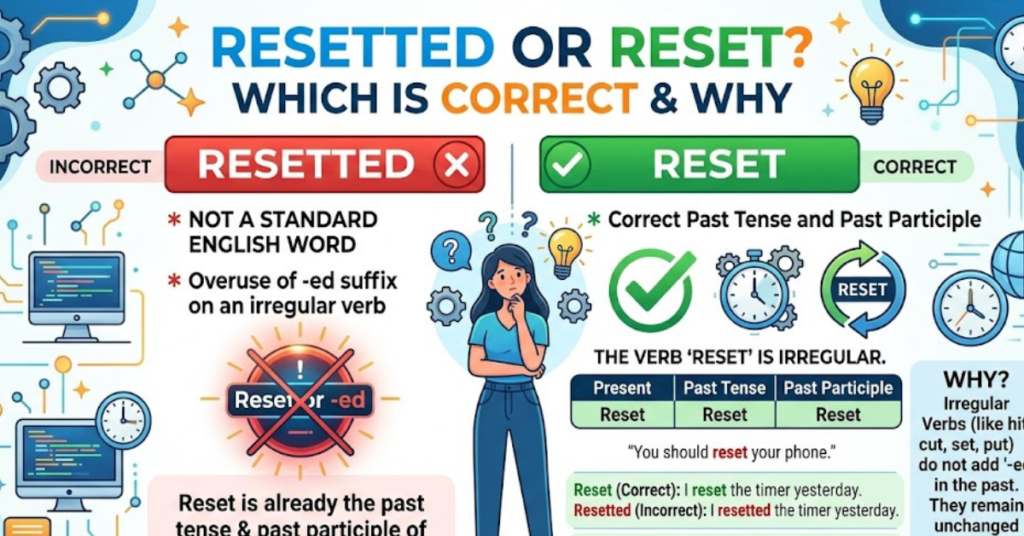
Here’s the short answer: “reset” is correct, while “resetted” is generally considered incorrect. But there’s more to it than that. In this guide, you’ll understand why this happens, how English verb rules work in this case, and how to use the word properly in real-life sentences.
Understanding “Reset” as a Verb
“Reset” is what’s known as an irregular verb, but not in the way you might expect. It belongs to a special group of verbs where:
- Present: reset
- Past: reset
- Past participle: reset
Examples:
- I reset my phone yesterday.
- She has already reset the password.
- They will reset the system tomorrow.
Notice something? The word doesn’t change form, no matter the tense.
Why “Resetted” Sounds Right (But Isn’t)
Common Mistake Explained
Many people assume that “reset” follows the regular verb pattern:
- Walk → walked
- Jump → jumped
So naturally, they think:
- Reset → resetted
That logic makes sense—but English doesn’t always play fair. “Reset” doesn’t follow the standard “-ed” rule.
Why It Sticks Around
You might still see “resetted” in:
- Informal writing
- Social media
- Non-native English usage
But in formal writing, exams, or professional communication, using “resetted” can make your writing look incorrect.
Similar Verbs That Don’t Change
To make this easier, here are other verbs that behave like “reset”:
- Cut → cut
- Put → put
- Set → set
- Hit → hit
Example:
- He cut the paper yesterday.
- She has put the book away.
Just like these, reset stays the same.
When Should You Use “Reset”?
Everyday Usage Examples
Tech Context (Most Common)
- I had to reset my laptop after it froze.
- The app automatically reset the settings.
General Use
- He reset his goals for the new year.
- They reset the game after the glitch.
Tip:
If you’re ever unsure, just remember:
There is no “resetted” in standard English. Stick with “reset.”
Quick Grammar Rule to Remember
- Resetted → Incorrect
- Reset → Correct (all tenses)
Simple rule:
If the base verb is “reset,” every tense stays “reset.”
Common Confusions Around “Reset”
1. Is “resetting” correct?
Yes! When adding “-ing,” the verb behaves normally:
- I am resetting the device.
2. What about “resets”?
Also correct in present tense:
- She resets her password often.
3. Why not “resetted”?
Because “reset” doesn’t follow regular past tense rules—it’s an exception.
FAQs About “Resetted or Reset”
1. Is “resetted” ever correct?
No, “resetted” is not accepted in standard English. Always use “reset.”
2. What is the past tense of reset?
The past tense is reset. Example: I reset the system yesterday.
3. Why do people say “resetted”?
It comes from applying regular verb rules incorrectly.
4. Is “reseted” correct?
No, “reseted” is also incorrect.
5. How can I remember the correct form?
Think of similar verbs like “set” or “cut”—they don’t change either.
Conclusion
When it comes to “resetted or reset,” the correct choice is simple: always use “reset.” Even though “resetted” might sound logical, it doesn’t follow standard English rules.
If you want your writing to sound clean, professional, and grammatically correct, stick with the original form—no matter the tense.
Mastering small details like this might seem minor, but they make a big difference in how your writing is perceived. Keep sharpening your grammar, and you’ll stand out without even trying.